For curtain retailers · Turnaround
Losing jobs to someone faster?
What a supplier might tell you, crossed out: “Allow two to six weeks.”
What we say instead: Standard curtains: an estimated 5 business days.
Speedy Blinds makes standard curtains in an estimated 5 business days, counted from the later of your order being accepted and paid and the fabric arriving. Group C takes 3 weeks, and every estimate stretches through the peak months, late October into January.

What it costs you
- Your customer wants curtains before the guests arrive, and your quote says six weeks.
- You lose the job to someone who said sooner.
- Every week a job waits is a week your customer has to change their mind.
What you can be certain of
JOB SPDY-2012 · TURNAROUND
- 01
- We commit to
- Published estimates: standard curtains 5 business days, Group C 3 weeks, tracks and roller blinds 3 business days.
- How you’ll know
- They’re written into our tolerances, not just said on the phone.
- 02
- We commit to
- A clock that starts at a point you can see.
- How you’ll know
- The later of two things: your order accepted and paid in cleared funds, and the fabric arriving at our factory.
- 03
- We commit to
- Business days that mean business days.
- How you’ll know
- Weekends, Victorian public holidays and our Christmas shutdown don’t count, and the shutdown dates go to all retailers in advance.
- 04
- We commit to
- A straight answer on an urgent job.
- How you’ll know
- Tell us a job is urgent and you’ll get a yes or no straight away. If it’s a yes, it costs the same.
- 05
- We commit to
- Our capacity, stated plainly.
- How you’ll know
- About 100 curtains a day normally and about 150 at peak, roughly 500 metres of curtain fabric a day.
Five days, one job
One standard curtain job, SPDY-2012, followed through the factory, the same job the homepage follows.

Day 1
Order checked and created
Read back against what you sent (width, drop, fabric, heading, hem) before it becomes a production instruction.
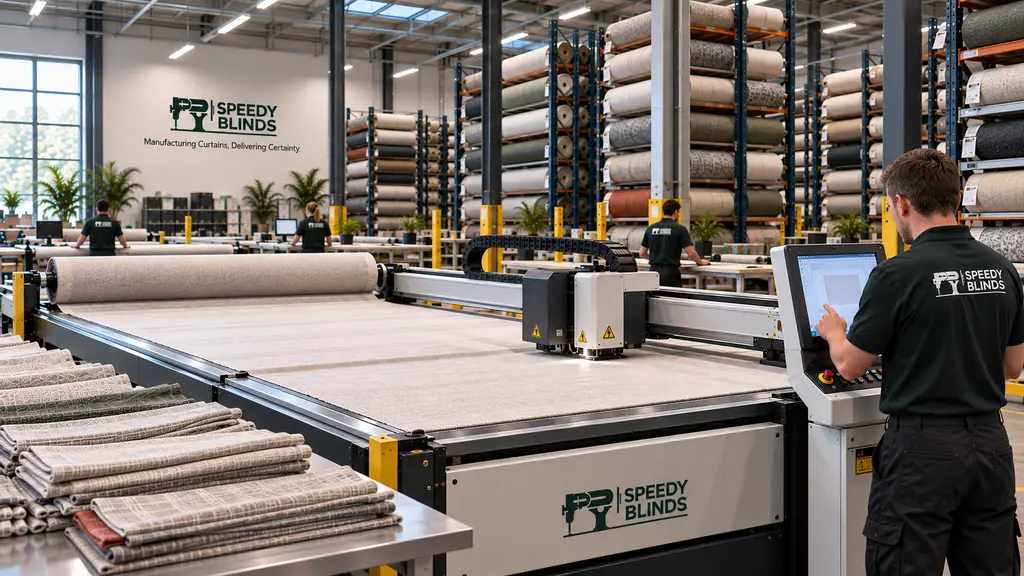
Day 2
Fabric opened and cut
The job’s own measurements drive the cut. No retyping, no second set of numbers.
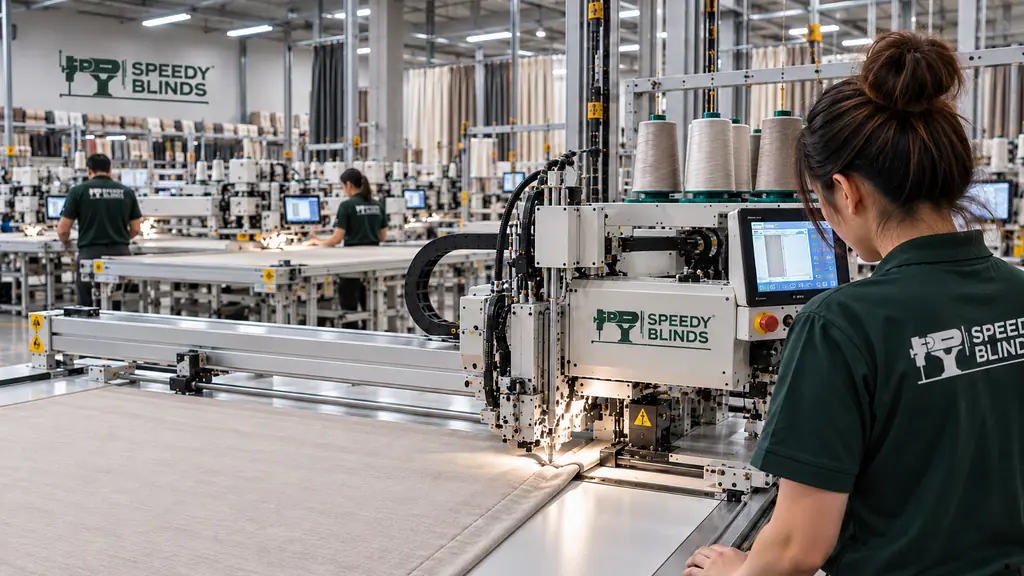
Day 3
Sewing
Hems, headings and joins sewn to one standard. Joins are vertical.
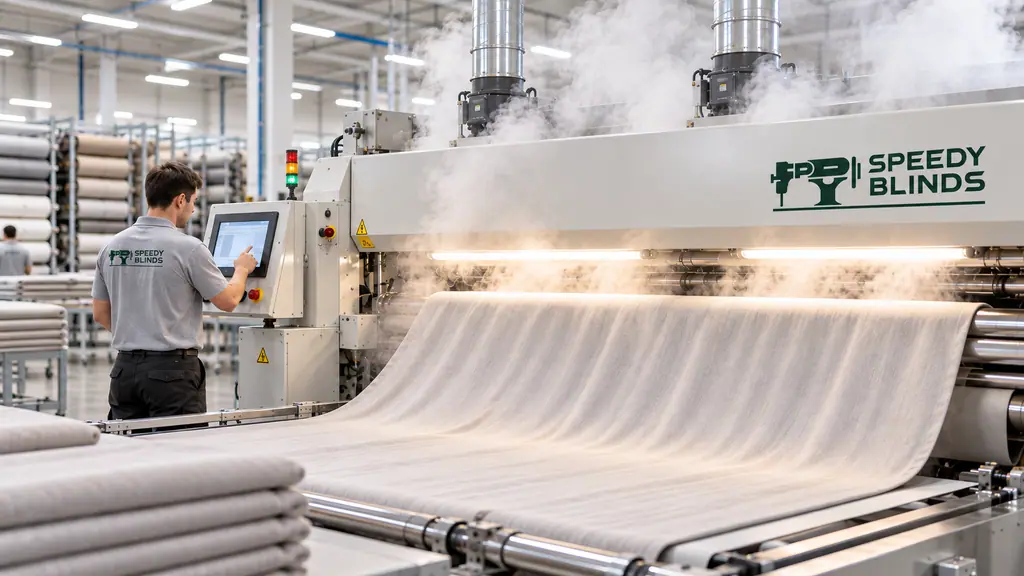
Day 4
Ironing and finishing
Pressed and finished before it’s packed.
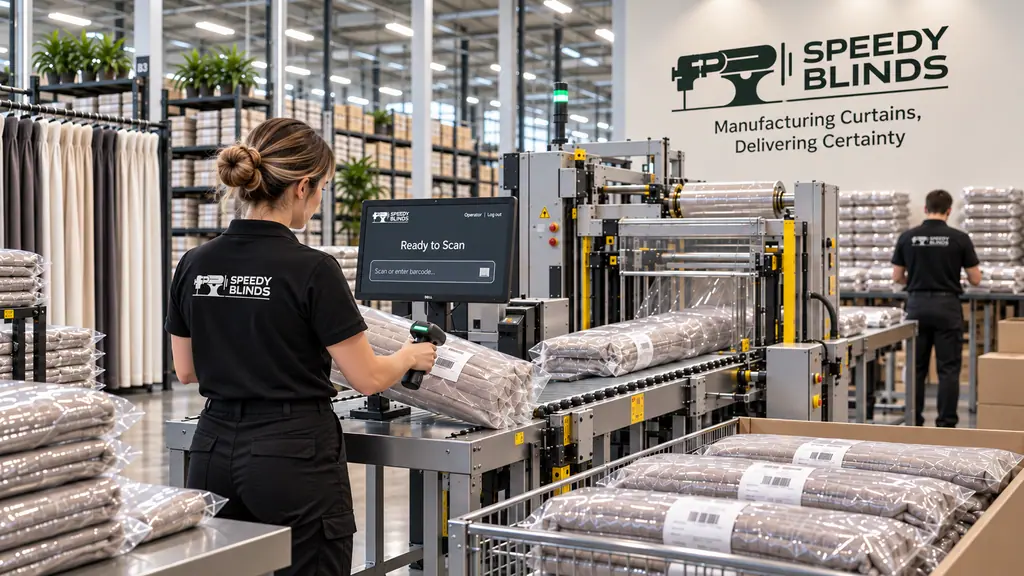
Day 5
Checked and packed
Scanned against its job number and checked against the order before it’s packed.


Watch one job go through the factory
One job’s path, not a timetable for every job. Every estimate runs from the later of your order accepted and paid and the fabric arriving.
Quick because of how the work is set up
Not because anyone rushes.
Machines for the repeat work
Modern equipment takes the steps a machine does more consistently than a person.
One set of order details
Your order stays one record from start to finish and, where the machinery supports it, feeds the machinery directly: less retyping, less room for a typo.
A process built to repeat
Controlled options, written specifications and production checks, so the same job comes out the same way in any month.
People who know the work
Experienced people handle the fabric, make the calls and check the result.
Key facts
- Standard curtains
- 5 business days
- Estimate
- Group C curtains
- 3 weeks
- Estimate
- Pre training
- +3 business days
- On top of the curtain estimate
- Tracks and roller blinds
- 3 business days
- Estimate
- Curtains a day
- About 100, about 150 at peak
Questions retailers ask
When do the 5 business days start?
From the later of two things: your order accepted and paid in cleared funds, and the fabric arriving at our factory. Fabric that has to be ordered in adds its delivery time before the count starts.
Do you count weekends and public holidays?
No. A business day here is Monday to Friday, leaving out Victorian public holidays and our Christmas shutdown. The shutdown dates go to all retailers in advance.
What takes longer than 5 days?
Group C curtains take an estimated 3 weeks. You can check which group a fabric is in on Group Search. Pre training adds 3 business days on top of the curtain time. And every estimate stretches through the industry’s peak months, late October into January; if a date is tight then, call us before you promise it.
How long do tracks and roller blinds take?
An estimated 3 business days each, counted from the job being accepted and paid in cleared funds.
How many curtains do you make a day?
About 100 on a normal day, about 150 at peak and about 70 when it’s quiet, roughly 500 metres of curtain fabric a day.
The other reasons retailers switch
Dates that keep getting pushed back
What moves a date, spelled out, and word as soon as your fabric goes on back order.Losing jobs on price
One price list for every retailer, and $0 extra for an urgent job.Quality that’s hit and miss
Made to your order within written tolerances, and checked before it’s packed.Their mistakes costing you your reputation
Checked twice before it leaves, and owned if it’s wrong.Never knowing where a job is up to
Each part of every job shows its stage in the Order app.Paying for a supplier’s mistakes
If we made it wrong, we put it right under our Made to Spec Guarantee.No one to ask when a job gets tricky
One number for calls, texts and WhatsApp, in business hours.A supplier who also sells to your customers
Wholesale only. It’s clause 2.1 of our trading terms.Looking for a new curtain manufacturer?
Manufacturing curtains, delivering certainty.
Start with one job
No application, no minimum, no contract.
Send us one job and see how it comes back. Most retailers start that way.
Tell us what you sell, where you work and what you need from a workroom. We’ll tell you plainly whether we’re the right fit, and if we’re not, we’ll say that too.